

Suspension & Steering
Steering & Suspension Service
Your vehicle’s suspension and steering systems are very intertwined, with various complex components that rely on one another to maintain a smooth ride and comfortable steering feel. With that said, you can probably see how even a small issue in the suspension or steering systems of your vehicle can cause significant problems throughout the whole chassis.
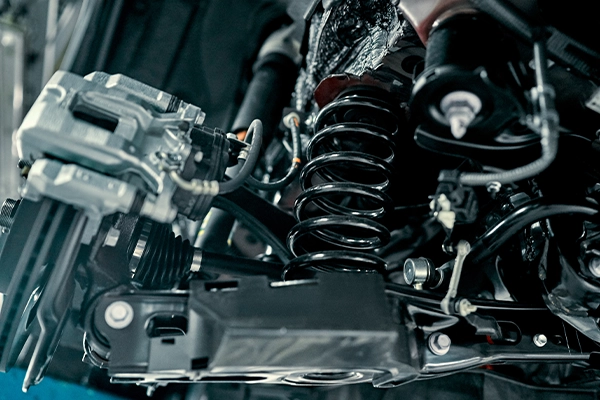
Proper steering system maintenance consists of changing your power steering fluid to ensure that your steering rack is always receiving adequate hydraulic pressure to assist you in turning the vehicle. Steering systems also rely on components such as the power steering pump and various electrical components to maintain easy steering control. If you notice any problems with your steering wheel or power steering system, it’s important to have your vehicle inspected by a trusted professional as soon as possible to avoid further damage and potentially dangerous situations.
Suspension components such as the shocks and struts also require occasional attention, as these parts are responsible for keeping your vehicle under control over uneven road surfaces and through turns. When any of these components fail, or the surrounding components such as bushings and hardware, it can prevent the entire suspension system from operating as intended and could prevent you from having full control of your vehicle, which can lead to some pretty dangerous circumstances if left unaddressed.
If you suspect your vehicle has suspension or steering issues, don’t hesitate to reach out to the team at Carlsbad Auto Service in Carlsbad, California. Our experienced technicians have the equipment and training needed to provide your vehicle with the utmost quality of suspension and steering diagnostics, inspections, maintenance, and repair. Don’t let these issues longer and worsen, give us a call or schedule online with our friendly and knowledgeable team today!
Suspension FAQs
What Are Some Signs of Suspension Problems?
Suspension problems can show up as audible clunks and bangs when braking, turning, or going over speed bumps. Changes in the way your vehicle handles are another sign that something is wrong.
Do I Need a Wheel Alignment After Suspension Repair?
It is always a good idea to get an alignment check after suspension repairs are performed, particularly the front suspension.
Why Is My Steering Wheel Crooked, but My Car Drives Straight?
While this problem can seem serious, it usually just requires an alignment to correct it.
Why Does My Steering Wheel Shake While Driving?
A shaking steering wheel is often caused by tire balance problems, uneven tire wear, bent wheels, alignment issues, or worn suspension and steering components. Even brake components can lead to abnormal vibrations. The vibration may occur only at certain speeds or while braking, which can help identify the source of the problem.
How Often Should I Have My Alignment Checked?
We recommend checking wheel alignment annually or anytime you notice uneven tire wear or steering issues, particularly after hitting a pothole or curb.
Can Hitting a Pothole Damage My Suspension?
Yes. Hitting a pothole can damage tires, bend wheels, knock your vehicle out of alignment, and accelerate wear on suspension and steering components and tires. If you notice pulling, vibrations, or unusual tire wear after hitting a pothole, have your vehicle inspected.
Do I Need a Wheel Alignment After Suspension Repair?
It is always a good idea to get an alignment check after suspension repairs are performed, particularly the front suspension. It is crucial to perform an alignment after suspension repairs are performed. New suspension parts bring the suspension and steering back to where they were from the factory. Your suspension wears over time and when new parts are installed, they must all be calibrated together so that the system can perform as intended.
Why Is My Steering Wheel Crooked, but My Car Drives Straight?
While this problem can seem serious, it usually just requires an alignment to correct it, but it could also point to worn or even bent steering components. A visual inspection should be performed before any alignment is done.
What Is the Difference Between Shocks and Struts and How Do I Know If I Need New Ones?
Both help control vehicle movement and ride quality. Struts are a structural part of the suspension system that utilize a coil spring with a mount on top that has a shock that runs through the middle of all that, while shocks primarily dampen suspension movement and has the coil spring separate from itself. Common signs of worn shocks or struts include excessive bouncing, nose-diving while braking, poor handling, uneven tire wear, leaking fluid, and a rough ride. Replacing worn suspension components helps improve ride comfort, vehicle control, and tire life.