

A diesel particulate filter, commonly called a DPF, is an emissions control component found on many modern diesel vehicles. Its job is to capture soot from the engine’s exhaust before those particles enter the atmosphere.
DPFs help diesel engines meet emissions requirements while allowing them to deliver the torque and fuel efficiency drivers expect. Like other emissions components, however, the filter needs the right operating conditions and maintenance to work properly.
Understanding how a diesel particulate filter works, what causes it to clog, and which warning signs to watch for can help you avoid expensive repairs.
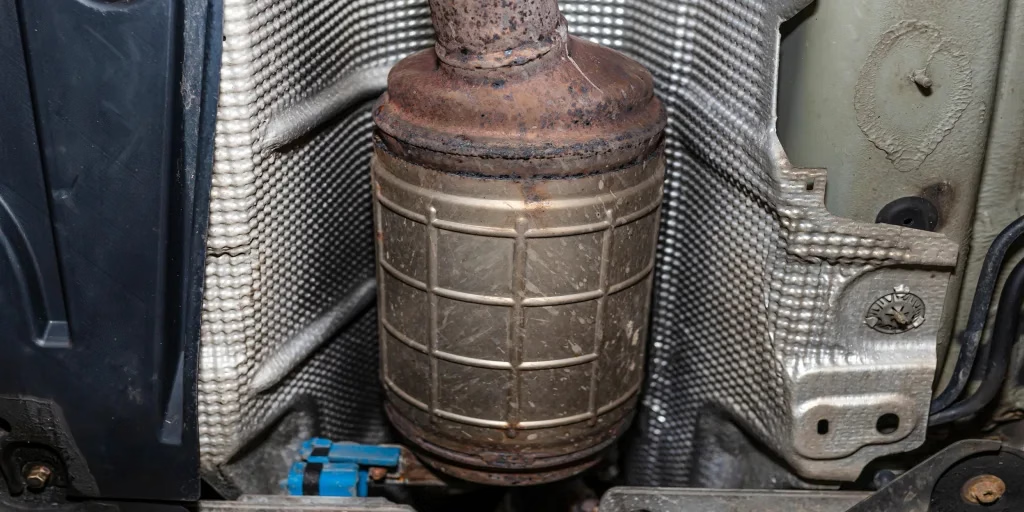
How Does a Diesel Particulate Filter Work?
Diesel engines produce soot as part of the combustion process. A DPF traps these microscopic particles inside a specially designed filter structure while allowing exhaust gases to pass through.
Over time, soot and carbon debris accumulates inside the filter. The vehicle must periodically remove that soot through a process called regeneration.
During regeneration, exhaust temperatures rise enough to burn the trapped soot into a much smaller amount of ash. The engine control system manages this process using information from sensors that monitor conditions such as exhaust temperature and pressure.
There are several types of regeneration:
- Passive regeneration: Exhaust temperatures become high enough during normal operation to burn soot without a special intervention.
- Active regeneration: The vehicle’s control system takes steps to raise exhaust temperature and burn accumulated soot.
- Service or forced regeneration: A qualified technician initiates a regeneration procedure using diagnostic equipment when the vehicle’s condition and manufacturer procedures allow it.
Not every DPF problem can be resolved through regeneration. Ash does not burn away like soot, so it gradually accumulates and may eventually require professional filter cleaning or replacement.
What Causes a DPF to Clog?
A DPF can accumulate soot more quickly when a diesel vehicle rarely reaches the operating conditions needed for successful regeneration.
Frequent short trips, extended idling, and repeated low-speed driving may prevent the exhaust system from getting hot enough. The vehicle may attempt regeneration but fail to complete it.
Other potential causes include:
- Faulty exhaust temperature or pressure sensors
- Engine problems that produce excessive soot
- Incorrect engine oil for the vehicle’s emissions system
- Fuel injection or air intake issues
- A malfunctioning exhaust gas recirculation system
- Excessive ash buildup from long-term use
A clogged DPF is sometimes a symptom of another engine problem. Replacing or cleaning the filter without addressing the underlying cause may lead to the same issue returning.
Common Symptoms of a Blocked DPF
The signs of a restricted diesel particulate filter vary by vehicle, but several symptoms are worth watching for.
DPF warning light: A dashboard warning may indicate that soot accumulation has reached a level requiring action. Follow the instructions in your owner’s manual, since the appropriate response differs by manufacturer.
Reduced engine power: Some vehicles limit engine output when DPF restriction becomes severe. This protective mode can make acceleration sluggish.
Poor fuel economy: Repeated regeneration attempts or an underlying engine problem may increase fuel consumption.
Cooling fan operation or a hot exhaust smell: During and after regeneration, the exhaust system can become extremely hot. Some fan operation or a hot smell may occur, depending on the vehicle.
Frequent regeneration: If regeneration happens unusually often, the engine may be producing too much soot or the filter may have an underlying restriction.
A severe warning, flashing warning light, or reduced-power message should not be ignored. Continuing to drive with a heavily restricted filter can damage emissions components and may leave the vehicle unable to operate normally.
Can You Clean a Diesel Particulate Filter?
In many cases, yes. The right method depends on the filter’s condition, soot loading, ash accumulation, and the manufacturer’s service procedures.
A normal regeneration can burn off soot when the system is functioning correctly and the filter has not exceeded safe limits. If regeneration is repeatedly unsuccessful, a technician should diagnose the cause before attempting another cycle.
Professional DPF cleaning can remove accumulated ash from a filter that remains structurally sound. If the filter is cracked, melted, or otherwise damaged, replacement may be necessary.
Avoid attempting a forced regeneration without proper training and equipment. The process generates extremely high exhaust temperatures, creating a fire hazard if performed in an unsuitable location. It may also be unsafe when the filter is severely restricted or another fault is present.
How Can You Prevent DPF Problems?
Follow the manufacturer’s maintenance schedule and use the specified engine oil. Certain diesel engines require low-ash oil to help protect emissions equipment.
Where appropriate, give the vehicle the type of driving its manufacturer recommends for regeneration. Some vehicles provide specific instructions when the DPF warning appears. Never assume that a highway drive will solve every DPF warning, and do not ignore a warning that persists.
Keep up with fuel system maintenance and address engine warning lights promptly. Early diagnosis can prevent excessive soot production and reduce the chance of filter damage.
Diesel Vehicle Service & Repair in Carlsbad, California
Diesel particulate filters play an important role in reducing emissions, but they depend on proper engine operation and maintenance. Recognizing the early signs of a blocked DPF can help you avoid reduced performance and costly repairs.
If your diesel vehicle has a DPF warning light, frequent regeneration cycles, or unexplained power loss, schedule an inspection with the friendly team at Carlsbad Auto Service in Carlsbad, CA. Our technicians have the experience and equipment needed to provide your diesel vehicle with the utmost quality of inspection, diagnostic, and repair!